Attic and ceiling dry-out
Roof Leak Water Damage in Mandeville, LA
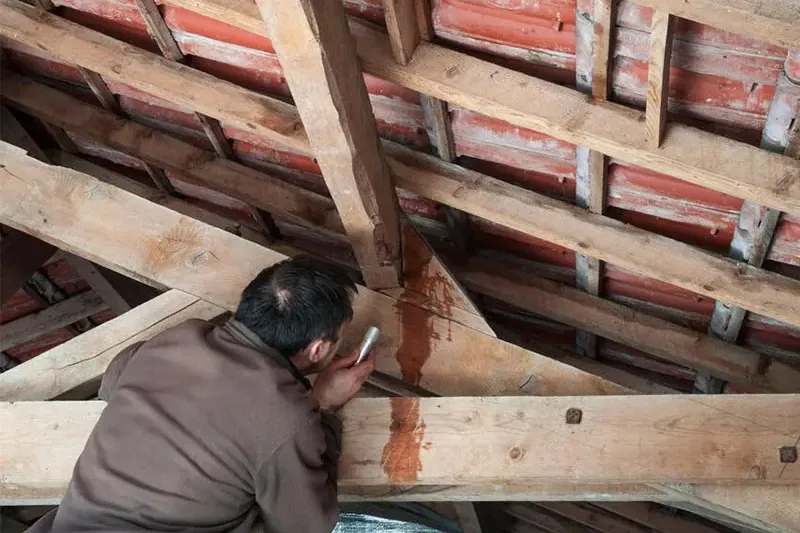
A roof leak usually starts small, at a shingle, a flashing seam or a vent, and soaks insulation long before a ceiling shows it. The drying team traces the water, opens what is wet and dries the attic and rooms below.
(888) 417-5665Call about a roof leak- Attic insulation pulled
- Ceilings dried from above
- Leak path traced
Right now
First steps for roof leak water damage
- Find the leak. Look for stains, dripping or damp insulation, and note which rooms sit below.
- Protect the room. Move furniture, set a bucket and cover floors with plastic where water drips.
- Cover the roof. Have a roofer tarp the area, since a tarp stops new water but does not dry the attic.
- Photograph it. Photograph the stain, the attic if reachable, and the roof damage before repairs.
The trade facts behind the work
- The drying team dries the attic and the ceiling below as one job, not two.
- Insulation that stayed wet is removed because it holds water against drywall.
- A roofer fixes the opening while the restoration team keeps dry-out records.
Roof leak soaking the attic? Call the drying team. (888) 417-5665
How the work runs
How roof leak water damage is handled, step by step
- 1
Trace the water
Meters and a thermal camera follow the water down.
- 2
Pull wet layers
Soaked insulation and soft drywall are removed.
- 3
Dry both levels
Air movers and dehumidifiers run above and below.
- 4
Confirm readings
Rafters, drywall and cavities must read dry before closing.
Typical cost
What does roof leak water damage cost in Mandeville, LA?
A leak caught early costs a fraction of a long-running one. Pulling insulation at one spot and drying a ceiling from above stays low, while several ceilings and wall cavities opened after weeks of leaking reach the top range.
Small leak, caught early
$800 to $1,800
- Attic dried at one spot
- Wet insulation pulled
- Ceiling dried from above
Ceiling opened
$1,800 to $3,500
- Wet drywall removed
- Wider insulation removal
- Room below dried
Long-running leak
$3,500 to $7,000+
- Several ceilings opened
- Wall cavities dried
- Containment if needed
These are typical ranges, not a quote. The category of water, the square footage, the material class and how fast drying started move the number most. Try the water damage cost calculator for a planning figure.
After a storm, the first sign of a roof leak is often a brown ring on a ceiling. The water behind it has usually run along rafters and wiring before it dripped, so the damage is wider than the stain.
Where the water really goes
Rain gets in at worn shingles, cracked flashing, vent boots and skylight curbs, then follows the roof deck and framing downhill. Insulation soaks it up and holds it against the drywall below, which is why a small opening can wet a large ceiling.
Tarps, ice and the waiting period
After Hurricane Ida the mayor said the biggest requests were for tarps and ice, a reminder that a covered roof is the first step and a dried attic is the second. A tarp stops new water, but wet insulation underneath keeps working on the ceiling.
- Wet batts and blown insulation are removed at the leak
- Rafters and decking are dried with air movers
- Ceiling drywall is opened only where it is soft or stained
Drying from above and below
Attic work and room work are coordinated so air moves through both. The room below follows ceiling leak water damage methods, and storm losses with several openings fall under storm water damage.
What the roofer and the drying team each do
The roofer's job ends at the roof surface: replacing damaged shingles, resealing flashing and fitting new vent boots. Everything below belongs to drying, from insulation removal in the attic to readings on the ceiling and walls. Doing both in the right order keeps new rain from undoing the dry-out.
Ceilings that are still firm often dry through access holes, but once drywall softens it has to come down, so photos of the stain size at the start protect the claim.
Service area
Roof Leak Water Damage across Mandeville and nearby
Roof leak work covers homes from the lakefront district to neighborhoods such as Old Golden Shores, New Golden Shores, Greenleaves, Golden Glen and Mariners Village, and the roofs of shops along Highway 190.
The same service nearby: roof leak water damage in Slidell, Covington, Picayune.
See every town coveredRelated
Related water damage services
Questions
Roof Leak Water Damage questions, answered
Can a roof leak be dried without opening the ceiling?
Sometimes. A small, early leak can be dried through access holes and from the attic side. Sagging or soft drywall has to come down.
Who fixes the roof, and who dries the house?
A roofer repairs shingles, flashing and vents. The drying team removes wet insulation and dries the attic, ceiling and walls.
Does wet attic insulation have to be replaced?
Usually yes once it has stayed wet, because it holds moisture against the drywall below and loses its insulating value.
How can a roof leak be found if the stain is far from it?
Water runs along rafters and wiring. A moisture meter and thermal camera follow the wet trail back toward the opening.
Will insurance cover a roof leak?
Sudden storm damage is often covered, while slow leaks from wear may not be. Photos and a dated moisture record help the adjuster decide.
How soon should a roof leak be dried?
As soon as it is found. Wet insulation and drywall can start growing mold in 24 to 48 hours.
24/7 water damage dispatch
Dry the attic before the ceiling gives way
Water that gets in at a shingle or vent keeps spreading through insulation, so the drying team follows it from roof deck to floor.