Washer, dishwasher and fridge leaks
Appliance Leak Water Damage in Slidell, LA
A burst washer hose or a failed dishwasher seal can run for hours, and an ice maker hose can leak under the floor for weeks. The drying team dries the cabinets, the subfloor and the walls the water reached.
(888) 417-5665Appliance flooding the floor? Call- Under-cabinet drying
- Toe kick access
- Subfloor readings
Right now
First steps for appliance leak water damage
- Shut the valve. Close the supply valve behind the appliance, or the main.
- Unplug it. Disconnect power if you can do it without standing in water.
- Pull it out. Slide the appliance out only if it is safe, to let the floor breathe.
- Photograph it. Record the hose, the appliance label and the wet floor.
The trade facts behind the work
- Washer drain and dishwasher water are Category 2, gray water.
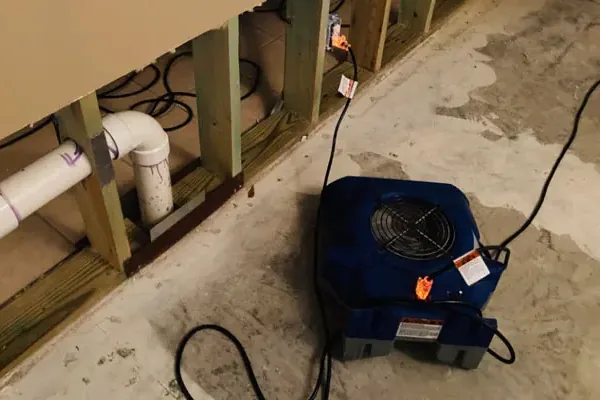
- Toe kicks come off so air reaches under the cabinets.
- Laminate over a wet subfloor usually comes up.
Washer or dishwasher water on the floor? Call (888) 417-5665
How the work runs
How appliance leak water damage is handled, step by step
- 1
Extract
Water pulled from floors and under the appliance.
- 2
Map
Readings under cabinets, flooring and wall bottoms.
- 3
Open and dry
Toe kicks off, air under the cabinets, LGR dehumidifiers.
- 4
Verify
Readings until the subfloor matches a dry reference.
Typical cost
What does appliance leak water damage cost in Slidell, LA?
In Slidell, LA, appliance leak water damage cleanup typically runs $700 to $4,000, depending on how long the leak ran, whether cabinets or flooring come out and whether the water was clean or gray. The appliance repair is separate.
Caught early
$700 to $1,500
- Extraction
- Toe kicks off, cabinet drying
- Air movers and a dehumidifier
Under the floor
$1,500 to $3,000
- Flooring lifted where wet
- Subfloor dried
- Daily readings
Slow leak, weeks long
$3,000 to $6,000+
- Cabinets pulled
- Wall bottoms opened
- Containment
These are typical ranges, not a quote. The category of water, the square footage, the material class and how fast drying started move the number most. Try the water damage cost calculator for a planning figure.
Appliance leaks are among the most common water losses in any home. Rubber washer hoses crack with age, dishwasher seals and drain hoses fail, and the thin plastic hose behind a refrigerator ice maker splits or works loose. Toilet supply hoses fail the same way. Most of these leaks hide under cabinets and flooring until the damage is well along.
Clean or gray water?
A supply hose leak is clean water, Category 1. Water from a washer drain or a dishwasher mid-cycle carries soap and food waste, so it is gray water, Category 2. When gray water soaks carpet pad, the pad comes out, and surfaces are cleaned before drying.
- Ice maker and supply hose leaks: usually Category 1
- Washer drain and dishwasher water: Category 2
- Water that sat for days can degrade a category
Drying under cabinets and floors
Kitchens and laundry rooms hide water. The drying team removes toe kicks, drills small holes in cabinet bases if needed and pushes dry air underneath. Laminate and vinyl plank over a wet subfloor often come up, while tile can stay if readings below it drop. Walls behind the appliance get checked for wicking.
- Toe kicks removed to dry under base cabinets
- Flooring lifted only where readings stay high
- Subfloor and wall bottoms dried to a goal
Cutting the risk
Braided steel washer hoses, a leak sensor under the dishwasher and a quick look behind the fridge once in a while catch most failures early. EPA WaterSense leak tips explain how to check for hidden leaks, and the Consumer Product Safety Commission lists appliance recalls.
Service area
Appliance Leak Water Damage across Slidell and nearby
The extraction crew and the drying team cover ZIP codes 70458, 70459, 70460 and 70469, from Olde Towne and the Gause Boulevard corridor to Cross Gates, Kingspoint and the lakefront canals of Eden Isles and Oak Harbor.
Nearby coverage reaches Pearl River, Lacombe, Mandeville, Covington, Picayune, Waveland and Diamondhead.
See every area and ZIP coveredRelated
Related water damage services
Questions
Appliance Leak Water Damage questions, answered
Which appliance leaks cause the most damage?
Washer supply hoses and refrigerator ice maker hoses, because they stay under pressure. A burst washer hose can run for hours.
Do the kitchen cabinets have to come out?
Not usually. Removing the toe kicks and drying under the cabinets saves most of them. Particleboard bases that swelled may need replacing.
Is washing machine water clean?
Supply hose water is clean. Drain water from a washer is gray water, Category 2, because it carries soap and soil.
How long does drying take?
Usually three to five days. Wood subfloors under laminate and long, slow leaks take longer.
Is an appliance leak covered by insurance?
Sudden water damage from a failed hose is often covered after the deductible; slow leaks over weeks often are not. Coverage depends on your policy, so check with your own insurer.
How can I tell if the ice maker is leaking?
Look for a damp floor at the front of the fridge, cupped flooring or a rising water bill. Pull the fridge out and check the hose and the valve.
24/7 water damage dispatch
Appliance leak under the floor? Dry it before it spreads.
The drying team gets air under the cabinets and flooring and logs readings until the subfloor is dry.