Dry to a written target
Structural Drying in Mandeville, LA
More than 80 percent of the historic lakefront district is in a flood zone, so floors, framing and old wood there often stay wet after the water is gone. The drying team dries each material to a written target.
(888) 417-5665Call for drying equipment- Moisture mapped first
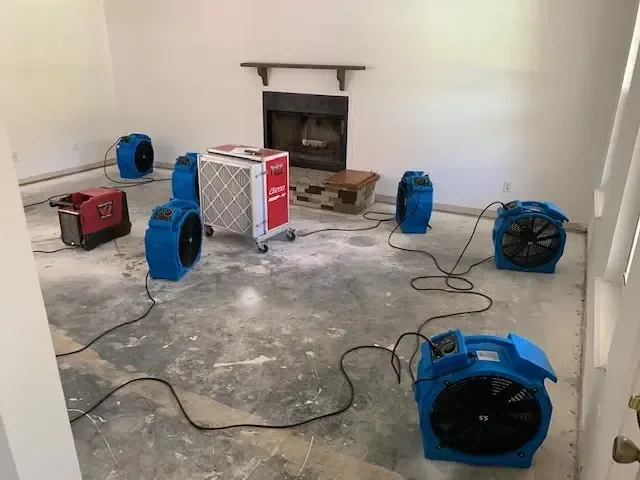
- LGR dehumidifiers
- Daily psychrometric logs
Right now
First steps for structural drying
- Stop new water. Fix or shut off the source so the drying is not working against a leak.
- Remove standing water. Extraction comes first, because fans cannot dry a flooded floor.
- Open the airflow. Open closets and cabinet doors, and move belongings off wet floors.
- Keep the records. Save receipts, photos and any equipment notes for the adjuster.
The trade facts behind the work
- The drying team writes a target for each material and measures against it daily.
- Equipment is chosen by drying class and room volume, not by habit.
- Daily logs show why the job ran as long as it did.
Wet walls or floors? Call the drying team to set equipment. (888) 417-5665
How the work runs
How structural drying is handled, step by step
- 1
Map the moisture
Meters and a thermal camera find the wet materials.
- 2
Set the equipment
Equipment goes in by room volume and class.
- 3
Read every day
Moisture and humidity are logged, and stalled materials change the setup.
- 4
Remove and sign off
Equipment leaves once materials reach target.
Typical cost
What does structural drying cost in Mandeville, LA?
Drying cost follows the loss class, the rooms involved and the days of equipment. Class one or two in a room or two stays low, class three across several rooms sits in the middle, and class four on slabs, hardwood or plaster reaches the top.
Class 1 or 2, a room or two
$1,200 to $2,800
- Air movers, LGR dehumidifier
- Three to four days
- Daily readings
Class 3, several rooms
$2,800 to $5,500
- Wall and ceiling cavities dried
- More equipment per room
- Psychrometric logs
Class 4: slab, hardwood or plaster
$5,500 to $10,000+
- Desiccant dehumidifiers
- Containment and floor mats
- Longer monitoring
These are typical ranges, not a quote. The category of water, the square footage, the material class and how fast drying started move the number most. Try the water damage cost calculator for a planning figure.
Removing water is only half of a restoration. Wood, plaster and concrete hold moisture long after the surface feels dry, so the drying team sets equipment by the room's volume and checks readings every day until each material meets its target.
Drying old wood and framing
Several lakefront homes built in the 1830s and 1840s still stand in the historic district, and dense old lumber, plaster and thick floors dry slowly. That is why readings, not appearances, decide when equipment leaves, and why drying can stretch past the usual three to four days.
How equipment is chosen
- LGR dehumidifiers pull moisture from the air in ordinary rooms
- Desiccant units handle slabs, hardwood and plaster
- Air movers and floor mats push air across wet surfaces
Equipment counts follow the drying class, from a few wet materials to a room where walls, floors and slabs all hold water.
Daily readings, no guesswork
Each visit records temperature, humidity and moisture content so progress is visible on paper. When a material stalls, the crew changes the setup rather than leaving fans running unchanged. Those logs also give an adjuster a clear record of why the job took the days it did.
After floods and leaks
Structural drying follows water extraction after any large loss, and it is the main stage of flood water cleanup and slab leak water damage work.
Drying classes set the equipment list. Class one covers a small loss in low-absorbing materials, class two a whole room with wet carpet and walls, class three water that came from above and soaked ceilings, walls and floors, and class four deep, dense materials such as hardwood, plaster and concrete. The class sets how much equipment goes in.
That is why a flooded plaster room can take longer than a wet bedroom with carpet, even when both look similar at first.
Service area
Structural Drying across Mandeville and nearby
Drying crews work from the historic lakefront district and Lakeshore Drive to neighborhoods such as Old Golden Shores, New Golden Shores, Greenleaves, Lakewood Heights and Mariners Village, and to shops and offices along Highway 190.
The same service nearby: structural drying in Slidell, Covington, Picayune.
See every town coveredRelated
Related water damage services
Questions
Structural Drying questions, answered
How do I know when drying is finished?
Moisture meters read each material against its target, and the readings are logged. Equipment stays until every material is at or below its target.
Why are fans and dehumidifiers both needed?
Air movers push air across wet surfaces so water evaporates, while dehumidifiers pull that moisture out of the air. Fans alone just move humid air around.
Can hardwood floors be saved?
Often when drying starts early, using mats and dehumidifiers that pull moisture from below. Cupped or buckled boards may need replacing once dried.
Why does drying take several days?
Wood, plaster and concrete release water slowly, and drying them faster can damage them. Three to four days is common for lighter jobs, with thicker materials taking longer.
Does the equipment make noise and use a lot of power?
Yes, air movers and dehumidifiers are loud and draw electricity. The crew places them to keep circuits from overloading and checks them daily.
Is drying documentation useful for insurance?
Yes. Daily logs, photos and equipment counts show an adjuster what was wet, what was dried and why the job lasted as long as it did.
24/7 water damage dispatch
Dry every material to a written target
Water hides in framing, subfloors and old wood, and the drying team maps it, sets the right equipment and logs readings until each material is dry.