Drying with daily readings
Structural Drying in Picayune, MS
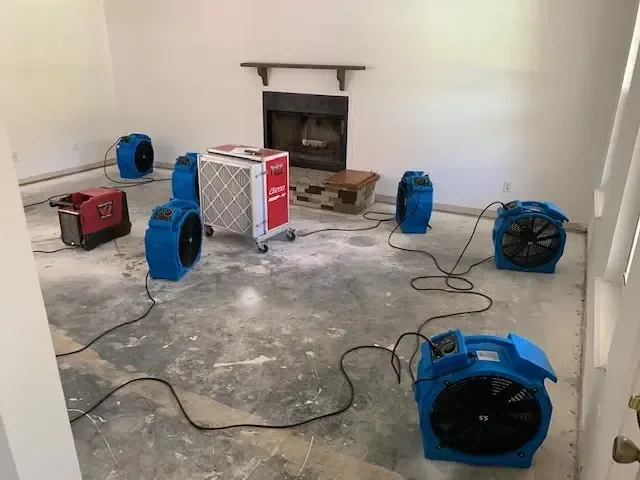
Removing standing water is only half the job. Wet framing, drywall and flooring keep holding moisture, and the drying crew uses dehumidifiers, air movers and daily readings to pull it out until the numbers match dry materials.
(888) 417-5665Call about structural drying- LGR dehumidifiers
- Daily psychrometric logs
- Walls and floors read
Right now
First steps for structural drying
- Note the wet spots. Mark every damp wall, floor and ceiling with tape or a pencil.
- Keep doors closed. Close windows and doors in the wet rooms so humidity stays low.
- Keep fans running. Leave the equipment running and do not move or unplug it.
- Log the days. Note the date the water arrived and when the equipment went in.
The trade facts behind the work
- Dehumidifiers are chosen by room volume and the amount of wet material.
- Air movers are aimed along floors and wall bottoms, not at the middle of rooms.
- Equipment comes out when readings match dry reference points.
Materials that feel dry can still hold the moisture that feeds mold. (888) 417-5665
How the work runs
How structural drying is handled, step by step
- 1
Map moisture
Meters show which materials are wet.
- 2
Set equipment
Dehumidifiers and air movers go in by room size.
- 3
Read daily
Temperature, humidity and moisture are logged each visit.
- 4
Release
Equipment is pulled once materials read dry.
Typical cost
What does structural drying cost in Picayune, LA?
Drying cost follows the number of rooms and the density of what got wet. Light jobs sit in the first range, wet walls and ceilings in several rooms in the second, and slab, hardwood or plaster in the third.
Light job, one or two rooms
$1,200 to $2,800
- LGR dehumidifier and air movers
- A few days of drying
- Readings every day
Heavier job, several rooms
$2,800 to $5,500
- Wall and ceiling cavities dried
- More equipment per room
- Psychrometric logs kept
Dense materials such as slab or plaster
$5,500 to $10,000+
- Desiccant dehumidifiers
- Floor mats and containment
- Longer monitoring
These are typical ranges, not a quote. The category of water, the square footage, the material class and how fast drying started move the number most. Try the water damage cost calculator for a planning figure.
Surfaces can feel dry while the materials behind them are not. Structural drying treats the building as a system of wet and dry layers and measures air and material moisture until both settle at normal readings.
Why drying here takes planning
FEMA describes the local climate as mild and humid, and on June 6, 2026 the city said rain pooled on flat ground faster than it could drain. Humid outdoor air limits how much more moisture it can take, so drying happens indoors with the building closed and dehumidifiers doing the work.
- Wet drywall and insulation hold water long after pumping
- Framing and subfloor dry slower than the surface
- Open windows can bring in more moisture than they remove
How the work is sized
Drying plans start with how much of the structure is wet. A light job involves one or two rooms and little absorption, a heavier job involves several rooms with wet walls and ceilings, and the heaviest involves dense materials such as slab, hardwood or plaster. Meters on drywall, wood and concrete show which layers are wet, and each room gets its own plan, since a bathroom and a living room rarely need the same equipment.
Daily readings and equipment changes
Each visit records temperature, humidity and moisture in the materials. Equipment is moved, added or removed based on those numbers, which keeps power use down and stops drying earlier than guesswork would.
- Dehumidifiers matched to room size
- Air movers aimed at wall bottoms and floors
- Cavity drying where walls stay wet
After the water is out
Drying follows water extraction when water was standing, and it supports flood water cleanup when the water was contaminated. The final readings go in a log that homeowners and adjusters can compare against dry reference points.
Service area
Structural Drying across Picayune and nearby
Drying equipment goes into homes and shops across Picayune, from the Westchester Subdivision and the Beech Street area to historic downtown, the Simmons Subdivision and the streets near Highland Parkway, wherever readings show moisture left behind.
The same service nearby: structural drying in Slidell, Diamondhead, Waveland.
See every town coveredRelated
Related water damage services
Questions
Structural Drying questions, answered
How do you know when a structure is dry?
Readings from wet areas are compared with readings from unaffected rooms of the same material. When they match, drying is complete.
Why is there so much equipment, and why is it loud?
Each wet room needs enough air movement and dehumidification to carry moisture out of the materials. More wet material means more units.
Can wet drywall always be dried in place?
Clean water caught early often allows it. Soft, swollen or contaminated drywall is removed instead, because it will not return to its original strength.
Does humid weather slow drying?
Outdoor humidity does not help, which is why dehumidifiers work with the building closed. Mild, humid conditions, as FEMA describes here, make closed room drying the better method.
How much does the electric bill rise?
Equipment draws power for the days it runs. Daily readings let the crew remove units as soon as rooms read dry, which keeps the extra use as short as possible.
What happens to hardwood and plaster?
These dense materials dry slowly and often need desiccant equipment, floor mats or longer monitoring. Some hardwood floors can be saved when caught early.
24/7 water damage dispatch
Dry the walls and floors behind the surface
The drying team sets the equipment, reads moisture every day and removes it only when readings match dry materials, with a log for the paperwork.