Drying after water damage
Structural Drying in Waveland, MS
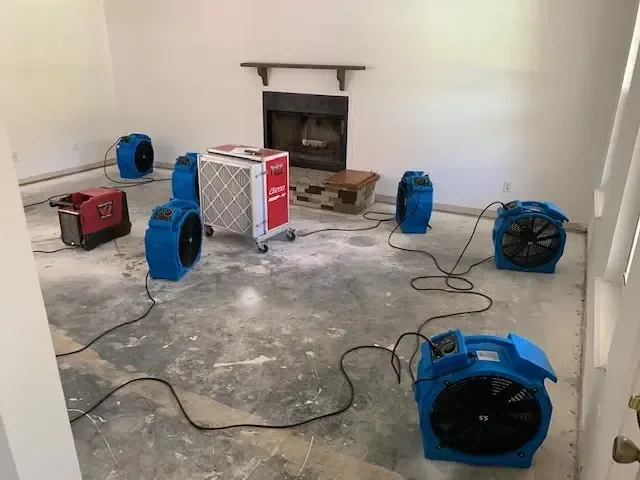
After surge, storm rain or a leak, wet framing, drywall and floors do not dry on their own. The drying team sets equipment by the class of loss and logs readings daily until every material reaches its target.
(888) 417-5665Call about structural drying- IICRC S500 drying
- LGR and desiccant units
- Daily psychrometric logs
Right now
First steps for structural drying
- Leave equipment running. Do not switch off air movers or dehumidifiers between visits, even when they are loud.
- Keep the room closed. Doors and windows stay shut so dehumidifiers pull moisture from the room, not outdoor air.
- Hold the thermostat steady. Set the air conditioning to a normal level, since warm air speeds evaporation.
- Report anything new. Tell the drying team about new stains, smells or soft spots right away.
The trade facts behind the work
- Equipment count follows room volume and the class of loss, not a rule of thumb.
- Readings are taken in the same spots daily so progress is comparable.
- Wall cavities are dried through small holes instead of removing drywall.
Wet walls or floors after a leak or storm? Call the drying team and describe what was wet. (888) 417-5665
How the work runs
How structural drying is handled, step by step
- 1
Classify
The loss class and water category are set from readings.
- 2
Place equipment
Air movers and dehumidifiers go in by volume and class.
- 3
Monitor daily
Temperature, humidity and moisture are logged each day.
- 4
Verify dry
Equipment comes out only when every reading is at target.
Typical cost
What does structural drying cost in Waveland, LA?
Structural drying scales with the class of loss and the number of rooms. Class 1 and 2 jobs sit at the low end, Class 3 costs more, and Class 4 work in slab, hardwood or plaster reaches the top.
Class 1 or 2, small area
$1,200 to $2,800
- Air movers and LGR unit
- Daily readings
- Short equipment stay
Class 3, several rooms
$2,800 to $5,500
- Wall and ceiling cavities dried
- Extra equipment per room
- Psychrometric logs
Class 4, dense materials
$5,500 to $10,000+
- Desiccant dehumidifiers
- Containment and floor mats
- Extended monitoring
These are typical ranges, not a quote. The category of water, the square footage, the material class and how fast drying started move the number most. Try the water damage cost calculator for a planning figure.
Drying a building is a measurement job. Surface dryness means little when framing, subfloor and wall cavities still hold water, so the drying team sets a target for each material and keeps equipment running until the meters show it has been reached.
Classes of water loss
The S500 standard sorts losses into four classes by how much water was absorbed and how fast it can evaporate. Class 1 and 2 jobs involve limited wetting in porous materials, Class 3 means water came from above and soaked walls, ceilings and floors, and Class 4 covers dense materials such as slab, hardwood and plaster that dry slowly.
- Class 1 and 2 use fewer machines for limited wetting
- Class 3 and 4 need more equipment and longer monitoring
What dries a building
Air movers push dry air across wet surfaces, and dehumidifiers pull the moisture out of the air so it cannot settle back into the structure. LGR units handle most jobs, and desiccant units take over for dense materials and cold, damp conditions.
- Air movers sit low and angled along wet walls
- Dehumidifiers run with doors and windows closed
- Wall and ceiling cavities are dried through small openings
Proof that it is dry
Each day the team records temperature, humidity and moisture readings in affected rooms and in an unaffected reference room. Equipment is reduced as materials reach dry goals and removed only when every reading is at target, and the drying time estimator shows what to expect.
Drying after Gulf storms
After surge or heavy tropical rain, a building can hold water in framing, insulation and subfloors that no longer looks wet. Structural drying follows flood water cleanup or storm water damage work, once what cannot be saved is out.
Service area
Structural Drying across Waveland and nearby
Structural drying runs wherever Waveland buildings take on water, from homes near the Beach Boulevard shoreline to the Gulfside Assembly area, Jackson Ridge and the whole area south of the CSX railroad.
The same service nearby: structural drying in Slidell, Diamondhead, Picayune.
See every town coveredRelated
Related water damage services
Questions
Structural Drying questions, answered
How long does structural drying take?
Most jobs run several days, longer for hardwood, plaster or slab. Readings decide the end date, not the calendar, so equipment stays until every material reaches its target.
Why are the machines so loud?
Air movers and dehumidifiers move a lot of air, and the noise is the cost of fast drying. Shutting them off early leaves moisture inside walls.
Will the electric bill rise?
Yes, because equipment runs around the clock, and the restoration team records its use so an adjuster can follow it.
Can drywall be dried instead of replaced?
Firm drywall that is clean and not swollen often dries in place. Swollen, crumbling or contaminated drywall is removed, since it will not hold up.
What is a psychrometric log?
It records temperature, humidity and moisture content over time, which shows whether drying is working and when equipment can come out.
Does drying prevent mold?
Fast, complete drying removes the damp conditions mold needs, which is why the work aims to finish within a couple of days of the loss.
24/7 water damage dispatch
Dry the structure to its target readings
Tell the crew what got wet and for how long, and the plan covers equipment, daily logs and a verified dry finish.