Leaks from above
Roof Leak Water Damage in Picayune, MS
A roof leak soaks insulation first and the ceiling second, and the damage usually travels farther than the stain. The drying team checks the attic, opens only the wet drywall and dries the space from above.
(888) 417-5665Call about a roof leak- Attic dried first
- Wet insulation pulled
- Ceiling opened if wet
Right now
First steps for roof leak water damage
- Catch the drip. Set a bucket under it and move furniture out from under the stain.
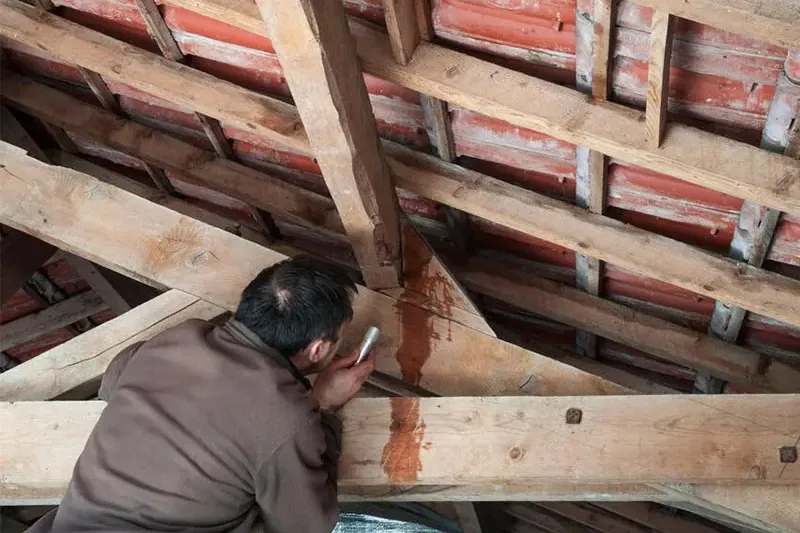
- Check the attic. Look from a safe spot for wet insulation and a trail of water along rafters.
- Mind the fixtures. If a light fixture is wet or sagging, turn its breaker off.
- Photograph it all. Shoot the stain, the attic and the roof from the ground.
The trade facts behind the work
- Attic drying starts above the ceiling, because wet insulation keeps dripping on a dry ceiling.
- Insulation is pulled where it is soaked and left where it is dry.
- Ceilings are cut in sections, not torn down wholesale.
Wet insulation keeps working on a ceiling long after the rain stops. (888) 417-5665
How the work runs
How roof leak water damage is handled, step by step
- 1
Inspect above
Attic photos and readings show where the water went.
- 2
Remove the wet
Soaked insulation and drywall come out in sections.
- 3
Dry from above
Air movers above and a dehumidifier below remove moisture.
- 4
Clear the framing
Readings on rafters and wall tops confirm the structure is dry.
Typical cost
What does roof leak water damage cost in Picayune, LA?
Roof leak work costs less when the water is caught early. A small leak with attic drying sits in the first range, an opened ceiling in the second, and a leak that ran for a long time reaches the third.
Small leak found quickly
$800 to $1,800
- One attic area dried
- Insulation pulled
- Air movers above
Ceiling section removed
$1,800 to $3,500
- Soaked drywall out
- More insulation pulled
- Room below dried
Leak that ran for weeks
$3,500 to $7,000+
- Several ceilings opened
- Wall cavities dried
- Containment as needed
These are typical ranges, not a quote. The category of water, the square footage, the material class and how fast drying started move the number most. Try the water damage cost calculator for a planning figure.
Roof water rarely stays where it enters. It runs along rafters, drops onto insulation and spreads sideways before it shows on a ceiling, so the response starts in the attic and works down to the room.
Why roof checks follow storms
FEMA puts mean annual rainfall in the area at about 58 inches, and 6 to 10 inches fell by June 18, 2026 during the remnants of Tropical Storm Arthur. Hurricane Katrina in 2005 and Hurricane Isaac in late August 2012 add to a local history where roofs are looked at after big storms.
- Wet insulation can hold water against the ceiling for days
- Stains show up well away from the actual opening
- A dry-looking ceiling can still have a wet attic above it
What happens in the attic
The drying team photographs the roof deck and rafters, pulls insulation that is soaked or stained, and leaves dry insulation in place. Attic air movers then push dry air across the framing while a dehumidifier handles the room below.
- Soaked insulation bagged and removed
- Rafters and decking read with a moisture meter
Ceilings, walls and what stays
Drywall that sags, stains or reads wet is cut out in sections, while firm board that dries stays. Wall tops are checked because water follows framing down into cavities. When several ceilings are affected, ceiling leak water damage covers the room level work.
Documenting a roof leak
Dated photos of the attic, the stains and the removed materials, plus moisture readings, give homeowners and roofers a shared record. Larger events fall under storm water damage.
Service area
Roof Leak Water Damage across Picayune and nearby
Roof leak work runs across Picayune, including the Simmons Subdivision, the Woods Subdivision, homes near historic downtown and the Highland Parkway area, plus any other address in the city where rain found a way in.
The same service nearby: roof leak water damage in Slidell, Diamondhead, Waveland.
See every town coveredRelated
Related water damage services
Questions
Roof Leak Water Damage questions, answered
Can a roof leak damage a ceiling that looks dry?
Yes. Wet insulation can hold water against the drywall, and the ceiling can look fine until it stains or sags. Readings from below and above show whether it is wet.
Does the roof need repair before drying?
The opening has to be closed, or the drying equipment is working against new rain. Roof repair is a roofer's job, and the drying team works from the attic and ceiling side.
Should wet attic insulation always come out?
Soaked or stained insulation usually does, since it keeps water against the ceiling. Dry insulation farther along the attic can usually stay.
How much rain is enough to find a weak roof?
A few inches in one storm can do it. The National Weather Service reported 6 to 10 inches of rain by June 18, 2026, which is the kind of event that shows weak spots.
Will insurance want photos of the attic?
Photos of the stain, the attic and the removed materials, with dates, show what happened and when. The drying team keeps readings that back them up.
When does mold become a concern?
Mold can start within 24 to 48 hours in wet insulation and drywall, which is why drying starts as early as possible.
24/7 water damage dispatch
Dry the attic before the ceiling gives out
The drying team removes soaked insulation and drywall, then dries from above and below until readings drop.