Raised homes and piers
Crawl Space Water Removal in Mandeville, LA
Some north shore homes were traditionally raised 5 to 6 feet on open brick piers, and FEMA is paying to elevate 33 residences, so raised houses are part of the local mix. The crew pumps out the water and dries the joists above.
(888) 417-5665Call about crawl space water- Pump-outs under the house
- Wet insulation pulled
- Joists and subfloor dried
Right now
First steps for crawl space water removal
- Look from the hatch. Check the hatch for standing water, and stay out during a flood or near wiring.
- Shut off the source. Close the main if a pipe is leaking, or note ditch overflow if rain caused it.
- Cut the power. Turn off circuits that run through the crawl space.
- Take photos. Photograph the water level from the opening.
The trade facts behind the work
- The crew pumps out first, then removes wet insulation and a soaked barrier.
- Joists and subfloor are metered from below and above.
- Flood-sourced water is handled as category three.
Water under the house? Call the extraction crew. (888) 417-5665
How the work runs
How crawl space water removal is handled, step by step
- 1
Pump out
Hoses carry water to a safe discharge point.
- 2
Clear wet layers
Wet insulation and the damaged barrier come out.
- 3
Dry from below
A dehumidifier and fans run until joists read dry.
- 4
Check above
Floors above are metered.
Typical cost
What does crawl space water removal cost in Mandeville, LA?
Crawl space jobs depend on how much water is down there and how long it stayed. Shallow water in a small area stays low, a whole crawl space with a removed barrier lands in the middle, and flood water or long-standing water reaches the top range.
Shallow water, small area
$1,500 to $3,000
- Pump-out
- Wet insulation pulled
- Dehumidifier under the house
Whole crawl space
$3,000 to $5,500
- Vapor barrier removed
- Joists and subfloor dried
- Daily readings
Flood water or long-standing
$5,500 to $10,000+
- Category 3 cleaning and treatment
- Floor above dried too
- Extended drying
These are typical ranges, not a quote. The category of water, the square footage, the material class and how fast drying started move the number most. Try the water damage cost calculator for a planning figure.
Water under a house is out of sight and easy to ignore, but it keeps wetting the joists, subfloor and insulation above it. The air under a raised home also feeds humidity into the living space.
Raised foundations and high water
A raised foundation helps, but it does not keep water out of a crawl space when rain pools or surge arrives. Hurricane Isaac and Hurricane Ida each brought a surge of about 9 feet, which shows how high lake water can climb on the north shore.
What the crew does underneath
- Standing water is pumped out, even in tight spaces
- Wet insulation and a soaked vapor barrier are removed
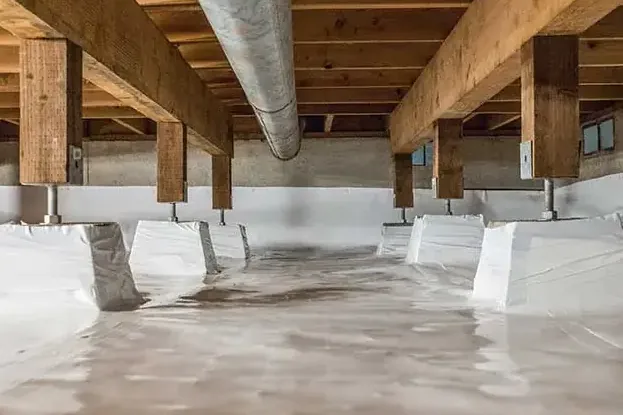
- Joists and subfloor are dried with a dehumidifier and fans
Crews enter with protective gear when flood water was the source, since that water counts as category three and carries contamination.
Keeping it from returning
Standing water often comes from ditch overflow, a plumbing leak or poor grading. A plumber or foundation contractor handles the cause, while the crew dries what was wet. Slab-built homes follow slab leak water damage methods instead, and large floods move into flood water cleanup.
Insulation, barrier and airflow
Wet insulation under a floor sags, loses its value and holds water against the subfloor, so it comes out. A vapor barrier that is torn or soaked is removed too, since it traps moisture under the joists. Vents and fans are checked so air can move once drying starts.
The crew photographs the crawl space before and after, which gives an adjuster a clear picture of what was under the house.
Service area
Crawl Space Water Removal across Mandeville and nearby
Crawl space calls come from raised homes across Mandeville, including neighborhoods such as Old Golden Shores, New Golden Shores, Greenleaves and Lakewood Heights, and from the historic lakefront district, where ground elevations start at about 3 feet near the lake.
The same service nearby: crawl space water removal in Slidell, Covington, Picayune.
See every town coveredRelated
Related water damage services
Questions
Crawl Space Water Removal questions, answered
Why does a crawl space take on water?
Rain pooling around the foundation, ditch overflow, a plumbing leak or flood surge can all put water under a house.
Is standing water under a house dangerous?
It can be. Flood-sourced water carries contamination, and wiring or ducts under the house add risk, so entry needs protective gear.
Does the vapor barrier have to be removed?
If it is soaked, torn or holding water against the ground, yes. A clean, intact barrier can sometimes be lifted, dried and reset.
Will wet insulation under the floor need replacing?
Usually yes. Batts that stayed wet lose their value and hold moisture against the subfloor, so they are removed.
How long does a crawl space take to dry?
Often several days. Joists and subfloor dry slowly from below, so the crew reads them each day until they reach target.
Does homeowners insurance cover a wet crawl space?
It depends on the source. Sudden pipe leaks are often covered, rising water is a flood policy matter, and slow seepage can be excluded.
24/7 water damage dispatch
Pump it out and dry the joists above
Water under a raised home keeps wetting insulation, joists and subfloor, so the crew pumps it out and dries every layer above.