Old Mandeville is the historic lakefront district, laid out in 1834 with the lake at its edge. Small businesses sit near the shore, and the blocks closest to the water have flooded repeatedly in storm surges. An owner who knows the first day's steps can cut the downtime and the loss.
Key takeaways
- After Hurricane Ida in 2021, businesses within three blocks of the lake took on water, so lake surge is a real risk for shops here.
- More than 80 percent of the district is in a flood zone, with ground from about 3 feet near the lake to more than 9 feet farthest from it.
- Power, stock and records come first: shut off power to wet areas, lift inventory and photograph everything before cleanup.
- Lake surge and street flooding are contaminated, so wet drywall, insulation and porous stock are removed, not dried in place.
- Brick walls and older wood framing dry slowly, and moisture readings decide when the building is ready to reopen.
Why the lakefront blocks flood
The district sits low. Ground elevations run from about 3 feet near the lake to more than 9 feet at the far edge, and a 5-foot seawall protects the low lakefront.
Even so, the blocks nearest the water have flooded repeatedly in storm surges. Water stood along the lakefront after Tropical Storm Cindy in June 2017, and Lakeshore Drive and nearby streets flooded on June 8, 2020 as Tropical Storm Cristobal moved through.
Hurricane Ida came ashore on August 29, 2021 as a Category 4 storm, and businesses within three blocks of the lake took on water afterward.
Water also comes from the rain side. A downpour can pond on the streets and push toward the shore, so a shop can take water with no surge at all.
Safety, stock and records on the first day
A shop owner faces competing jobs at once: safety, stock, records and the building itself. Sorting them in order saves money later.
Safety and power
Water and electricity do not mix, and a wet storefront can hide live outlets near the floor. If water is near a panel, outlets or equipment, stay out and have the power shut off by a professional.
- Do not stand in water near outlets, registers or a panel.
- Turn off the equipment that can be reached safely and dry.
- Keep staff and customers out of flooded areas.
Stock, records and photos
Move inventory, files and electronics off the floor and onto high shelves or out of the room. Before anything is thrown away, photograph the damage and the high water mark on each wall.
A written list of what was lost, with photos, is the paperwork most owners are asked for later.
What the water is and why it matters
Water that comes in from the lake or from flooded streets is not clean. It carries silt, sewage and runoff, so the cleanup treats it as contaminated water.
That changes what stays and what goes. Porous materials that soaked in it are removed instead of dried, and the crew works in a way that does not spread the contamination to dry areas.
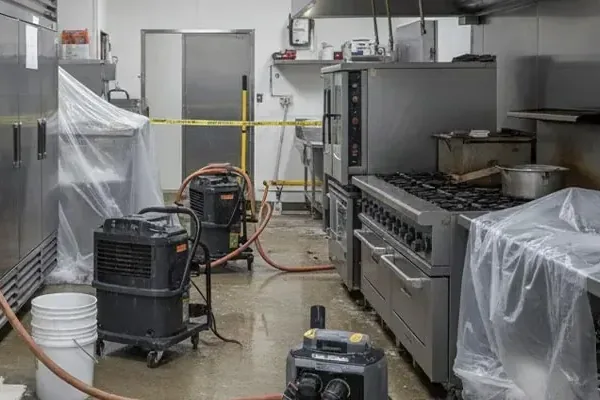
Water in a shop or office falls under commercial water damage, and crews can often phase the work so part of the space stays usable.
- Wet drywall and insulation are cut out and bagged.
- Carpet, pad and cardboard stock that sat in the water go.
- Hard surfaces are cleaned and sanitized after the water is out.
- Counters, shelving and displays are checked for trapped moisture.
Brick, old wood and slow drying
Some lakefront buildings date to the 1830s and 1840s, and many storefronts mix brick, plaster and old wood. Those materials soak up water and release it slowly.
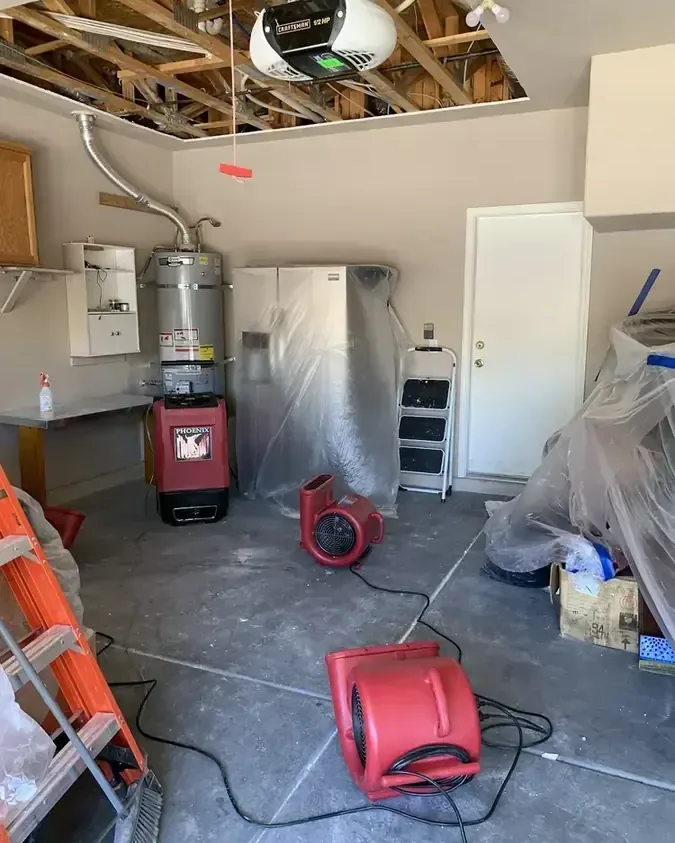
The drying team does not guess. It takes moisture readings in the walls, the floor and the framing, sets up dehumidifiers and fans, and returns to take the readings again.
- Brick holds moisture and can keep a wall damp long after the floor looks dry.
- Old floorboards can cup if dried too fast.
- Closed wall cavities need openings so air can reach them.
- Readings, not appearance, show when it is safe to close walls and reopen.
Working with the local rules
After Hurricane Ida the city stated that all plumbing, electrical, mechanical and structural repairs must be permitted and inspected, and the city Planning Department handles permits. A business owner who plans repairs does well to ask early what needs a permit.
Questions about water or sewer service go to the city's Public Works department. Keeping the repair order clear, with extraction first, drying second and rebuilding last, keeps the permit steps from slowing the reopening.
The structural drying service covers how walls, floors and framing are dried before anything is rebuilt. Other local water damage experts can be found through the Old Mandeville hub.
Pulling a reopening plan together
The goal after a lake flood is to reopen with as little lost time as possible. A short written plan keeps the owner, the landlord and the crew on the same page.
Ask the crew for a written scope that shows what was removed, what was dried and the final moisture readings. Those records matter when a building owner, a lender or an insurer asks what happened.
- Tell the landlord or property manager early, because walls and shared systems may belong to the building.
- Keep a log of dates, readings, photos and calls in one place.
- Reopen in phases, starting with areas that read dry and sit away from the wet zone.
- Confirm that power, water and any permit inspections are done before customers return.
Reducing risk before the next surge
The city is rebuilding its lakefront seawall, and FEMA is paying to elevate two commercial buildings and 33 residences. Neither fact removes the need for a plan at the shop level.
- Keep key stock and records on upper shelves during hurricane season.
- Know the location of the main power shutoff.
- Photograph the shop while it is dry, so later damage is easy to show.
- Keep a short list of who to call for water removal, power and repairs.
Questions
How far does lake water usually reach into Old Mandeville?
It varies by storm. After Hurricane Ida, businesses within three blocks of the lake took on water, and ground height changes from about 3 feet near the shore to more than 9 feet farthest from it.
Can a business stay open during drying?
Sometimes, in dry areas, once the wet zone is isolated. The crew can often phase the work so part of a shop reopens while another part is still being dried.
Is water from the lake treated differently from a pipe leak?
Yes. Lake surge and street flooding carry silt and contamination, while a clean supply pipe leak does not. That changes what is removed and how the area is cleaned.
What paperwork helps after a flood at a shop?
Photos of the damage and the high water mark, a written list of lost stock and equipment, and notes on what was removed. These help with insurance or assistance conversations.
Who handles water and sewer questions in the city?
Water or sewer problems go to the city's Public Works department, and the Planning Department handles permits for repairs.