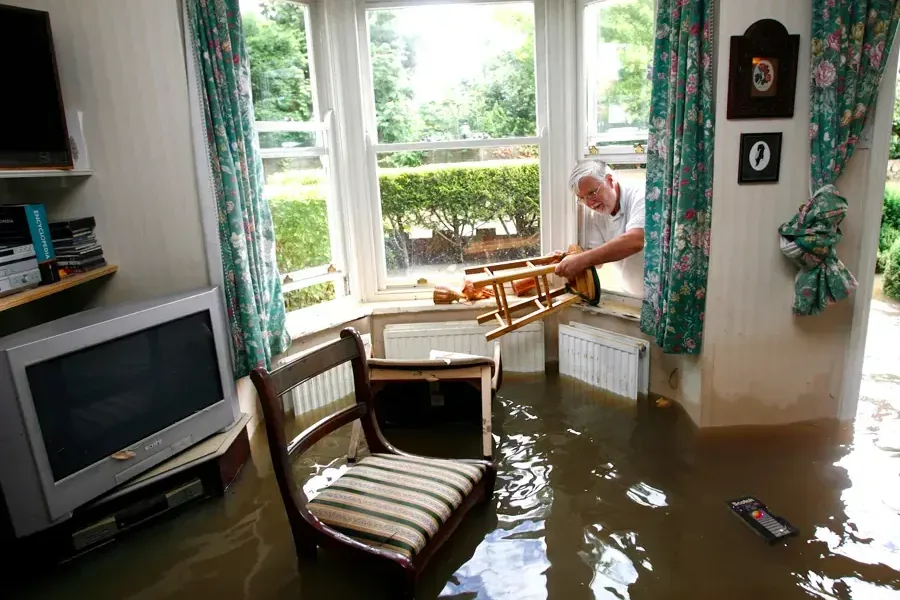
Waveland, Mississippi sits on the Gulf of Mexico along Mississippi Sound, so many of its floods come from the water side. Surge water is not rain. It carries sewage, silt and debris from the Gulf and the shore, and the cleanup that follows is built around that.
Key takeaways
- The U.S. Geological Survey estimated that Katrina's surge exceeded 20 feet in Waveland on August 29, 2005.
- The National Hurricane Center reported a 5.7 foot surge at the local tide gauge during Hurricane Isaac in August 2012.
- Beach Boulevard flooded as Hurricane Sally approached on September 14, 2020.
- Surge water is handled as Category 3 water, so porous materials that soaked in it are removed and not dried.
- Extraction comes first, then drying with moisture readings, then repairs.
Why Waveland floods from the Gulf side
The city's storm record shows what the Gulf can do. Hurricane Camille came ashore on August 17, 1969 and heavily damaged the part of town south of the Louisville and Nashville Railroad.
Recovery lasted nearly a decade.
The USGS estimated that Katrina's surge exceeded 20 feet in Waveland, and NPR reported in August 2015 that Katrina damaged or destroyed nearly every residence in the city.
Smaller storms still matter for a single house. Isaac's 5.7 foot surge at the tide gauge flooded parts of the city in late August 2012, and Beach Boulevard flooded on September 14, 2020 as Sally approached.
- Camille, Katrina, Isaac and Sally each pushed Gulf water onto land in a different way.
- The Associated Press reported that Gulf water crept over the shore into bike paths and parking lots before Sally, with the surge expected to coincide with high tide.
- NOAA lists flood thresholds at the tide gauge of 1.46 feet for minor, 2.46 feet for moderate and 6.96 feet for major flooding above mean higher high water.
What Category 3 means for the cleanup
Restoration crews sort water into three categories. Category 1 is clean water from a supply pipe, Category 2 is used water such as a washing machine overflow, and Category 3 is grossly contaminated water.
Surge water falls into Category 3 because it has crossed shore, streets and drains before it reaches a house. A household can check which water category applies to see how the classes differ.
- Carpet and pad that soaked in surge water are removed.
- Insulation inside wet wall cavities is pulled and bagged.
- Drywall and baseboards that wicked the water upward are cut above the high water mark.
- Soft furnishings and cardboard that stood in the water are discarded.
- Hard surfaces are cleaned and sanitized after the water is out.
Day one in a house the surge reached
The first day has two jobs: keep the household safe and keep the damage from growing. Moving in a clear order makes the cleanup faster and cheaper.
Safety first
Surge water can hide sharp debris, live outlets and contamination. If water is near an outlet or the panel, stay out and leave the power shutoff to a professional.
- Keep children and pets out of the water.
- Wear boots and gloves if contact cannot be avoided.
- Do not run the heat or air conditioning while ducts may be wet.
Photos and belongings
Photograph the high water mark on each wall, the damaged belongings and the condition of every room before cleanup starts.
Lift anything that can be saved onto dry surfaces, and leave heavy wet furniture where it stands until the crew can move it.
Extraction and drying after surge
The extraction crew pumps standing water first, then pulls water out of carpet and floors. The full process is described under flood water cleanup.
When the loss started with wind and rain from a named storm, the wider repair path appears under storm water damage. After the water is out, the drying team takes moisture readings in the floor, the framing and the walls.
- Pumps remove standing water from rooms.
- Extraction tools lift water out of flooring.
- Mud and silt are shoveled or vacuumed before drying starts.
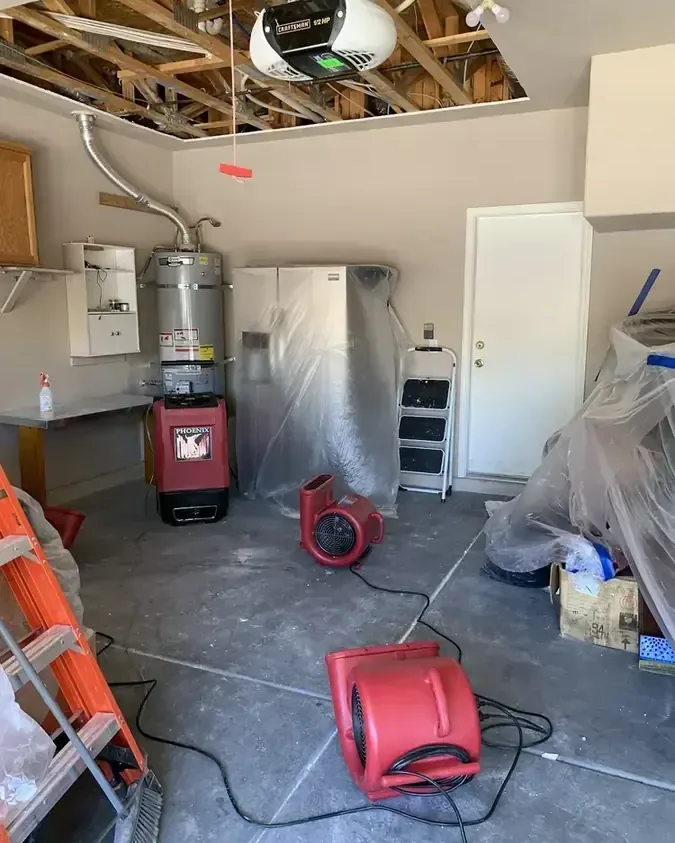
- Dehumidifiers and fans run until readings match a dry reference.
- Materials that will not dry are removed and bagged.
What surge does inside a building
Surge water does not stay in one room. It moves through doors, floor openings and wall cavities, and it soaks anything that touches the floor.
A house can look fine from the doorway while the damage runs under the floor and up inside the walls. That is why the work is checked room by room, with meters and a thermal camera.
- Outlets, switches and low wiring can be soaked and need an electrician's check.
- Ductwork under or beside a wet floor can fill with water or silt and must be cleaned or replaced.
- Wall cavities hold water behind drywall, even when the paint looks dry.
- Subfloors and framing take on moisture and need measured drying.
- Appliances and cabinets at floor level are often a total loss.
Silt, salt and what stays behind
Gulf water leaves more than moisture. Silt settles in corners, under cabinets and inside wall cavities, and it holds dampness against wood and drywall long after the standing water is gone.
That is why cleanup does not end at extraction. The crew cleans surfaces, checks hidden spaces and records readings so that the house is declared dry by measurement and not by appearance.
Damp, closed spaces also invite mold, one more reason wet materials are not left to sit.
Getting ready before the next storm
The city's floodplain page tells owners to call the city to learn the flood hazard for their property. In 2012 the city also pursued a FEMA acquisition program for repetitive-loss properties, with $933,000 approved for seven properties, and said it was looking at elevation grants to help raise homes.
- Find out the flood hazard for the property before the season starts.
- Photograph each room while it is dry, so later damage is easy to show.
- Know where the main power shutoff is and keep a flashlight with it.
- Store papers and valuables above floor level.
- Keep a list of local water damage experts, starting with the hub for the area.
Questions
Why is Gulf surge water treated as Category 3?
It crosses the shore, streets and drains before it reaches a house, so it can carry sewage, silt and bacteria. That is the definition of Category 3 water.
Can carpet be saved after surge water?
Usually not. Carpet and pad that soaked in Category 3 water are removed because they hold contamination and stay wet for a long time.
How did Isaac compare with Katrina here?
The National Hurricane Center reported a 5.7 foot surge at the tide gauge for Isaac, while the USGS estimated Katrina's surge exceeded 20 feet. Both put water into the city.
What comes after the water is pumped out?
Cleaning of surfaces, moisture readings, drying with dehumidifiers and fans, and then repairs once the structure reads dry.
Does the cleanup change if the water came from rain, not surge?
Yes. Rain that comes through a roof can be cleaner water, while surge and flooded streets are contaminated. That changes what is removed and how the area is cleaned.
Why is surge water hard to dry out?
It soaks into wood and drywall and leaves silt behind, and that silt keeps the materials damp. The drying team uses readings to know when each area is truly dry.