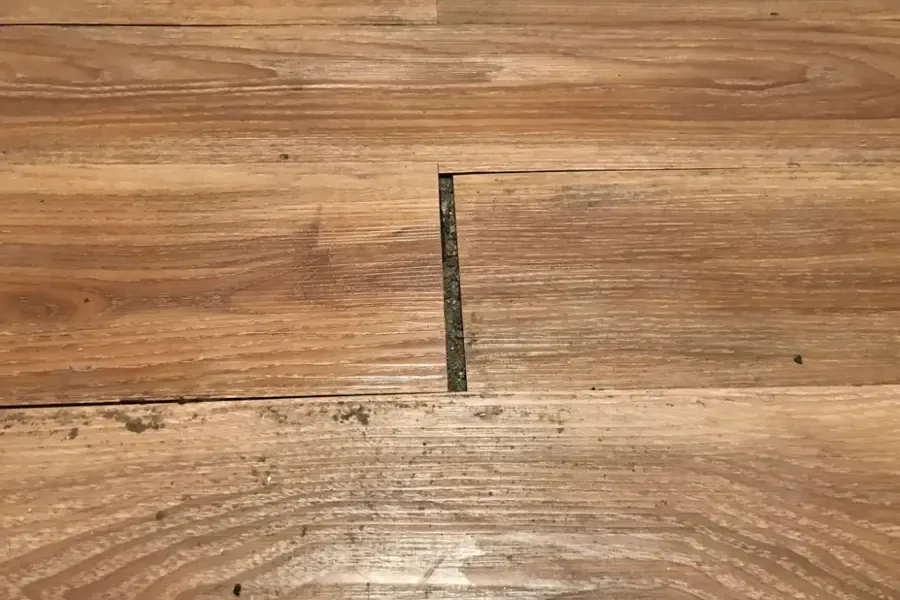
Slidell's population nearly tripled in the 1960s around the NASA computer center on Gause Boulevard, and much of the housing that followed was built on concrete slabs through the 1980s. Supply pipes and drains in and under those slabs have had decades to age. When one leaks, the water goes into the floor, not onto it.
Key takeaways
- Much of the housing from the 1960s to the 1980s is slab-on-grade, so pipes run in or under the concrete.
- Warm spots on the floor, the sound of running water and a spinning meter are classic signs of a pressurized supply leak.
- Cast iron drains under older slabs fail differently, at joints and cracks, and can carry sewage.
- A plumber finds and repairs the leak, and the restoration crew removes the water and dries the floor.
- Wet carpet, pad and baseboards come out, and the slab and framing are dried to measured readings.
Why slab homes from that era leak
A slab leak is a pipe problem first and a water damage problem second. The pipes that feed a house and the drains that carry waste away both pass through or under the concrete.
In older slab homes, those pipes include aging supply pipes and cast iron drains under older slabs. Both can wear out, and neither can be seen or reached without opening a floor.
- Supply pipes carry water under pressure, so a pinhole or a split can leak constantly.
- Cast iron drains can corrode, crack or open at a joint, and the leak is usually slow.
- The humid climate and about 66 inches of rain a year keep the ground around a slab damp for much of the year.
Signs a slab is leaking
Most slab leaks are found by the water they send up through the floor, or by a bill that does not make sense.
- A warm spot on a floor, especially on tile or bare concrete.
- The sound of water running when every fixture is off.
- A water meter that keeps moving with every fixture turned off.
- Damp carpet along walls, or baseboards that swell and stain.
- A musty smell in one room that does not go away.
- A water bill that climbs with no change in use.
Supply leak or drain leak?
The two types of leak look alike at the surface, but the water is different and so is the cleanup.
A pressurized supply pipe
A supply leak sends clean water up through the slab and into carpet, pad and wall bottoms. It is the more urgent leak because it keeps coming.
Shutting off the main water valve stops it until a plumber can locate the pipe.
A cast iron drain
A drain leak carries used water, and sometimes sewage. It tends to show up when a fixture drains, and the water is contaminated, so porous materials that soaked in it are removed.
When sewage is involved, the work follows the same rules as a backup, covered under sewage backup cleanup.
A quick check before calling
A household can narrow down the source with nothing but the water meter. The steps are simple and can be written down for the plumber.
- Turn off every fixture and appliance that uses water.
- Look at the meter and watch whether it keeps moving.
- Shut off the main water valve and see whether the movement stops.
- Walk the floors barefoot to feel for warm or damp spots.
- Photograph any wet area and note the time and date.
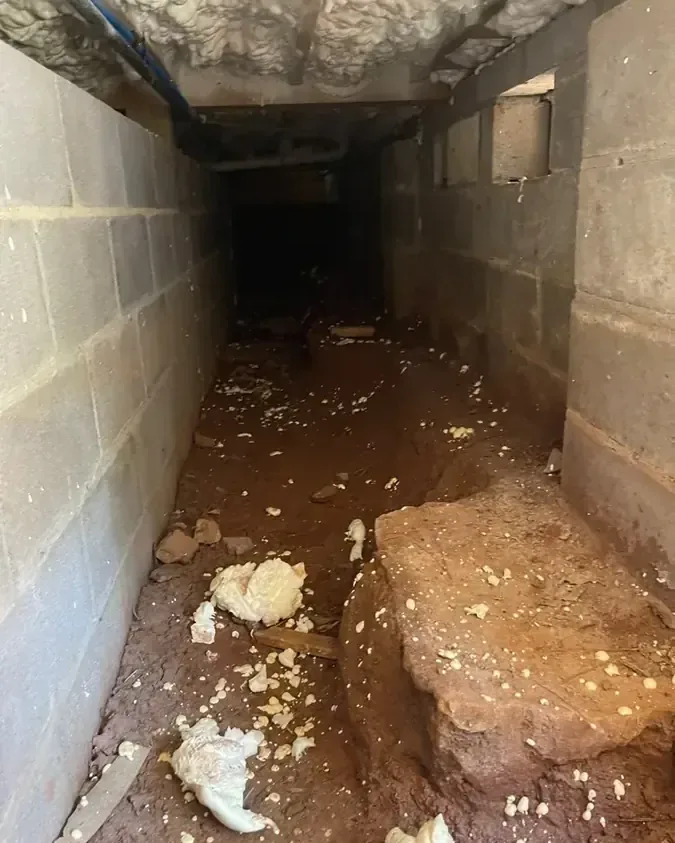
How different floors respond to a slab leak
The floor covering decides how much is lost. Water trapped between the covering and the concrete is the hardest to see and the slowest to dry.
- Carpet and pad wick water along the wall edge, and the pad usually has to come out.
- Tile can stay in place, but the grout and the bed beneath it can hold moisture.
- Wood and laminate cup, buckle or lift when water gets under them.
- Vinyl can trap moisture below it and hide a wet slab for a long time.
- Baseboards and the bottom of the drywall swell, stain and often have to be cut.
What the water damage crew does
The plumber stops the leak, and the restoration crew handles what the water did. The first job is to remove standing water and pull carpet and pad that soaked.
Concrete holds moisture for a long time, so the drying step is planned around measured readings. The service is described under slab leak water damage, and the longer drying phase under structural drying.
A household can try the drying time estimator to get a general sense of the timeline.
- Standing water is extracted from the floor surface.
- Carpet and pad that stayed wet are removed.
- Baseboards and lower drywall are checked and cut where moisture wicked up.
- Dehumidifiers and fans run while meters track the slab and the framing.
- Readings repeat until the floor and the walls match a dry reference.
Repairs and who does what
A plumber decides how to fix a slab leak. Options include rerouting a pipe, repairing it where it is found or replacing the drain, and the choice depends on where the pipe runs and what it serves.
The drying does not have to wait for the repair. Extraction and drying can start as soon as the water is stopped, and that limits how far the damage spreads.
Damp materials left in a closed house also invite mold, which is one more reason the water is not allowed to sit.
After a repair, a little routine attention helps catch the next problem early.
- Check the water meter now and then with every fixture off.
- Notice warm floor spots, damp carpet and musty smells.
- Keep photos and notes of past leaks and repairs.
- Review the whole water bill for sudden changes.
Questions
How do I know if a slab leak is a supply pipe or a drain?
A supply leak sends clean water up continuously, and the meter keeps moving with fixtures off. A drain leak shows up when fixtures drain, and the water can be contaminated.
Can a slab leak be fixed without breaking the floor?
Sometimes. A plumber can reroute a pipe or repair it from another route, but options depend on where the pipe runs. The plumber decides.
Does wet carpet over a slab need to be removed?
If the water was clean and the carpet dries fast, it can sometimes be saved. If the water was contaminated or the carpet stayed wet, carpet and pad are removed.
How long does it take for a slab to dry?
It depends on how wet it got and for how long, and concrete holds moisture for a long time. Moisture readings decide when it is dry.
Should the water be shut off at the main?
Yes, if a supply leak is suspected. It stops the water until a plumber locates and repairs the pipe.