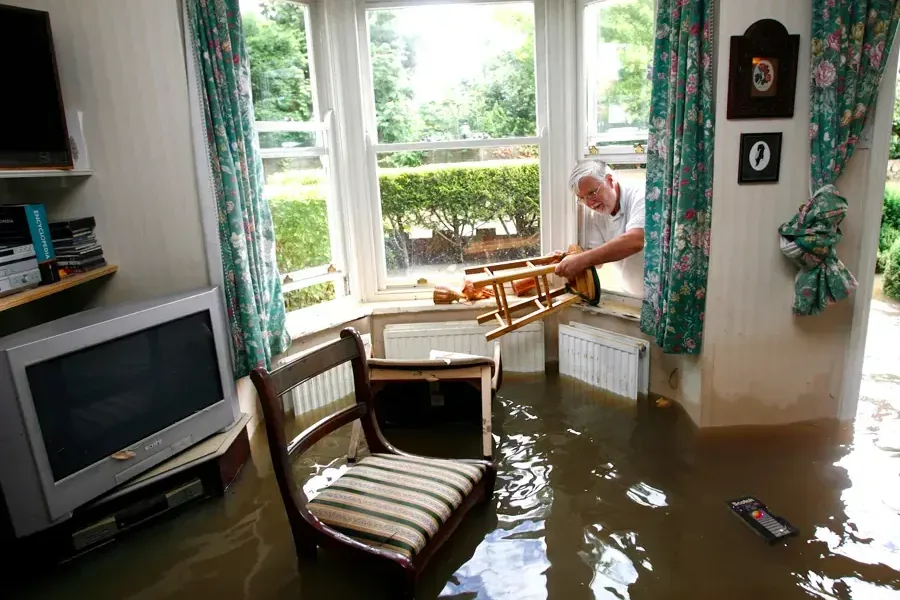
Slidell began as a railroad town chartered in 1888, and Olde Towne is where many of its raised cottages stand. A raised floor helps against shallow water, but bayou flooding can still fill the space underneath and creep into the rooms. What a household does on the first day decides how much of the floor, the insulation and the walls can be saved.
Key takeaways
- Bayou Bonfouca backed up into Bayou Patassat during Hurricane Isaac in 2012 and flooded Olde Towne, so bayou backup is a known local pattern.
- A raised cottage can look dry inside while water, wet insulation and soaked ductwork sit below the floor.
- Bayou and canal water is contaminated, so wet carpet, pad and under-floor insulation are removed instead of dried in place.
- Stay out of water that is near outlets or an electrical panel, and keep children and pets out of any floodwater.
- Extraction comes first, and moisture readings in the subfloor and framing decide when the cottage is truly dry.
Why Olde Towne floods when the bayous back up
Flooding in the historic district does not always fall from the sky. During Hurricane Isaac in 2012, Bayou Bonfouca backed up into Bayou Patassat and flooded Olde Towne.
That is a different problem from a roof leak or a burst pipe. The water rises from outside, spreads across yards and streets, and settles into the lowest part of every lot.
Hurricane Katrina on August 29, 2005 pushed a surge of over 10 feet through the city. With Lake Pontchartrain, Bayou Liberty and the Pearl River close by, about 66 inches of rain a year and a hurricane season that runs from June to November, bayou water is a regular worry.
- Bayou water can rise slowly and then linger while the bayous drain.
- Surge and rain mix, so the level in the street says little about the level under a house.
- One lot can flood while the next stays dry, because every yard slopes a little differently.
What a raised cottage changes on day one
Height buys time, but it also hides trouble. The part of a raised cottage that takes water first is the one nobody sees from a room.
Water under the floor
The space beneath the floor holds insulation, ductwork, pipes and the underside of the subfloor. When bayou water gets in there, the rooms above can feel solid underfoot while the framing sits in standing water.
This is a job for crawl space water removal, which has its own pump-out and drying steps.
- Insulation under the floor soaks up water and holds it against the subfloor.
- Ductwork under the cottage can fill with water or silt.
- Pipes and wiring in that space may be submerged.
Water in the rooms
When the water climbs past the foundation, it enters at doors and low openings. Floors, baseboards and the bottom of the walls are then wet all at once.
Older wood flooring and trim hold moisture for a long time, so the drying plan has to cover the surface and whatever sits beneath it.
First steps for an Olde Towne household
The first day is about safety, then about stopping the damage from spreading. A few steps help the extraction crew and keep the household out of harm.
- If water is near outlets or the electrical panel, stay out and leave the power shutoff to a professional.
- Take photos of the high water mark on the walls and, if it is safe to look, of the water under the floor.
- Lift rugs, books, electronics and small furniture up and out of the water.
- Keep children and pets out of floodwater, which can carry sewage and bacteria.
- Do not run the heat or air conditioning while the ductwork may be wet.
What extraction and drying look like in a raised cottage
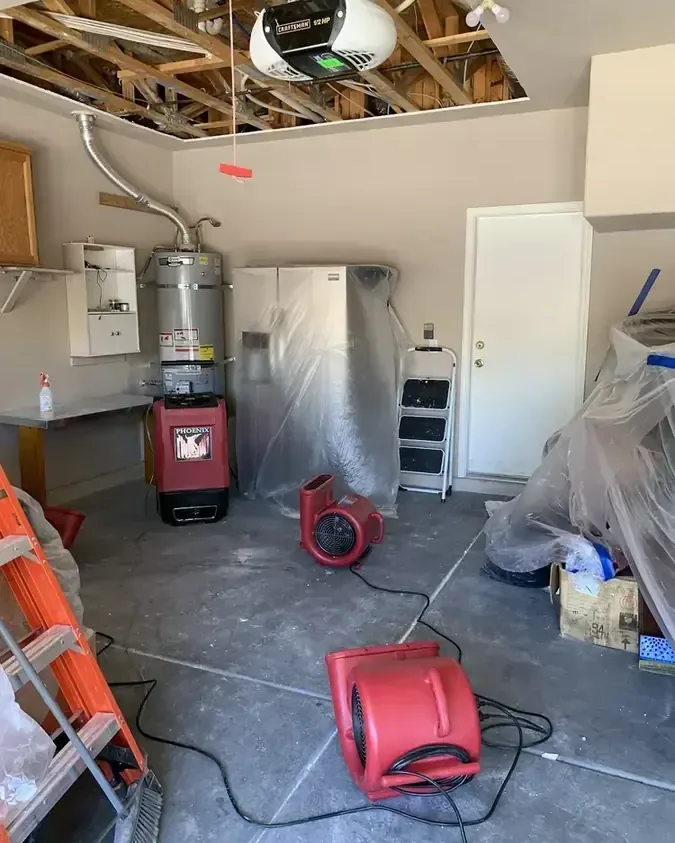
The extraction crew pumps standing water first, from the rooms and from the space under the floor. Then the drying team takes moisture readings in the subfloor, the joists, the base of the walls and the flooring.
For a flood that came in from outside, the full process is laid out under flood water cleanup.
- Standing water is pumped out of the rooms and from under the floor.
- Wet insulation under the floor is pulled and bagged.
- Carpet and pad are removed, and hardwood is checked board by board.
- Drywall is cut above the high water mark when moisture has wicked up the wall.
- Dehumidifiers and fans run until readings in the wood match a dry reference.
Why bayou water is treated as contaminated
Water from a bayou, a canal or a surge carries sewage, fuel, silt and bacteria. Restoration crews treat it as Category 3 water, the most contaminated class.
Porous materials that soaked in it are removed, not dried. To see how the categories differ, a household can check which water category applies.
- Carpet and pad that sat in the water
- Insulation under the floor and inside wet wall cavities
- Baseboards and lower drywall that wicked the water upward
- Soft furnishings and cardboard that stood in the flood
Drying older wood without causing more damage
Old floors and framing can swell, cup or split when they are dried too fast. The drying team brings moisture down at a steady pace and rechecks the readings instead of guessing.
Damp, closed spaces also invite mold, which is why wet materials are not left to sit. Opening the floor and moving air under it often does more good than anything done at the surface.
Some boards come through fine and some do not. The readings, not the look of the floor, make that call.
Getting ready before the next storm
Olde Towne is part of the wider area the crews cover, and the full list of neighborhoods is on the service area map. A little preparation changes what the first day looks like.
- Learn where the main power shutoff and the water shutoff are.
- Keep gutters and yard drains clear so rain can leave the lot.
- Photograph the rooms and the space under the floor while they are dry, for comparison later.
- Store papers and keepsakes above floor level.
Questions
Does a raised cottage stay dry in a bayou flood?
Not always. The rooms may stay above the water while the space under the floor fills. Wet insulation and ductwork down there can hold moisture against the subfloor for a long time.
Is bayou flood water safe to touch?
No. It can carry sewage, fuel and bacteria. If contact cannot be avoided, boots and gloves help, and children and pets should stay out.
Can wet hardwood in an older cottage be saved?
Sometimes. Moisture readings decide it. Boards that stayed flat and dried evenly can stay, while cupped or lifted boards are usually replaced.
How is bayou backup different from a heavy rain flood?
Rain flooding comes from above and drains once the rain stops. Bayou backup rises from outside as the water level climbs, and it can stay for a while.
What should be photographed before cleanup starts?
The high water mark on each wall, damaged belongings and the condition of the floor and the space under it. Photos and notes help with any later insurance or assistance paperwork.