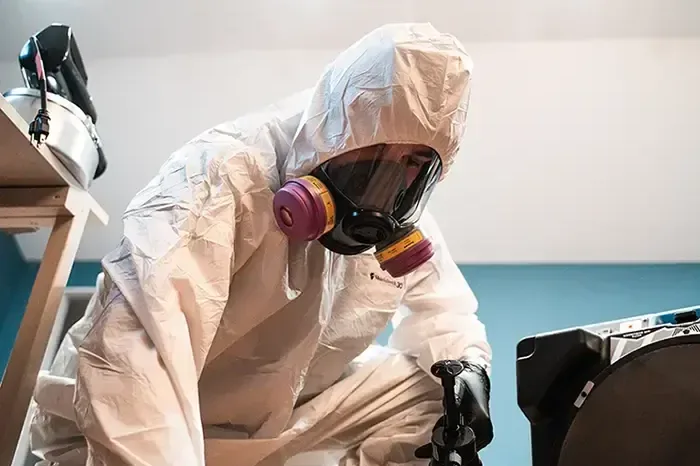
The Diamondhead Water and Sewer District provides water and sewer service in the city, and in a 2022 infrastructure project list it described about 4,300 customers. In its own words, much of the sewer system is cracked, leaking clay pipe about 40 years old. For a household, the practical result is simple: sewage can come back up, and what follows is a cleanup with its own rules.
Key takeaways
- The District says much of its sewer system is cracked and leaking clay pipe about 40 years old.
- The District says the resulting inflow and infiltration causes sewage overflows and costly cleanup.
- Any sewage that comes into a house is treated as Category 3 contaminated water.
- Porous materials that touched sewage are removed, not dried and kept.
- Stop using the fixtures, keep children and pets away and photograph the damage before cleanup.
What the District says about its sewer pipe
The District serves an area bounded by the Bay of St. Louis on the south, Rotten Bayou on the west, and Rotten Bayou and Bayou LaSalle on the north. It says its watersheds drain by open ditches with very little underground drainage, and that the discharge points are tidally influenced.
The District also says that much of its sewer system is cracked, leaking clay pipe about 40 years old. Water that seeps into the cracks, called inflow and infiltration, adds to the flow and causes sewage overflows and costly cleanup.
The District has described a proposed project of new gravity sewer lines, a sewer force main and new water mains meant to cut inflow and infiltration. Whether any part of it is built is a question for the District.
What a sewage backup looks like in a house
A backup rarely starts with a flood. It usually begins with small warnings that something is wrong with the drain.
Any one of these signs is enough to stop using the drains. Waiting to see whether it clears on its own lets more sewage reach the floor.
- Gurgling in a tub or a toilet when another fixture drains.
- Slow drains in several fixtures at once, not just one sink.
- A sewage smell near a floor drain, a tub or the lowest bathroom.
- Water or sewage coming up in the lowest tub, shower or floor drain.
- Dark water rising in a toilet when a washing machine empties.
First steps for a household
The goal at the start is to stop adding water to the drain and keep people out of contaminated areas.
Stop and protect
Do not flush, run the washing machine or use sinks and tubs while the drain is backing up. Keep children and pets out of the affected rooms.
- Close off the room so the contamination does not spread.
- Wear boots and gloves if contact cannot be avoided.
- Keep food and dishes away from the affected area.
Find the source and document the damage
Finding where the blockage or break is takes a plumber. The District can be contacted about problems with its sewer service.
Photograph the water, the affected rooms and any belongings that were hit before cleanup begins.
Why a backup is more than a smell
Sewage carries bacteria and viruses, and it spreads. A backup that reaches carpet, a cabinet base or a wall cavity leaves contamination behind that cannot be seen.
That is why the standard is removal, not surface cleaning, for anything porous. A mop and bleach do not reach into pad, drywall or insulation.
- Contamination wicks upward in drywall, so cuts are made above the visible stain.
- Cabinet toe kicks and baseboards hold sewage in hidden gaps.
- Air movers are used carefully so they do not blow contamination into clean rooms.
- Hard surfaces are sanitized only after the water and the porous materials are gone.
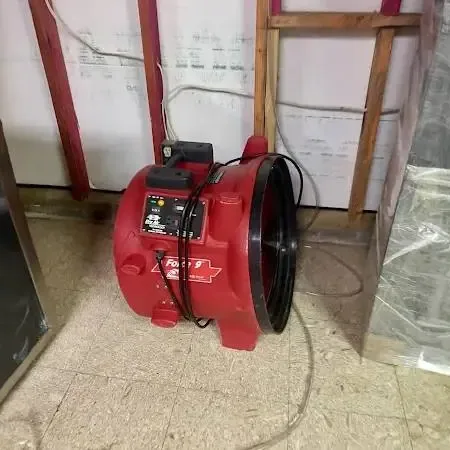
What the cleanup removes and cleans
Sewage is Category 3 water, the most contaminated class. A household can check which water category applies to see how the classes differ.
The sewage backup cleanup service follows a strict order, with removal first and drying after. The wider approach to Category 3 backups is laid out under the main sewage backup cleanup service.
- Carpet and pad that touched sewage are removed.
- Baseboards and lower drywall that wicked the water upward are cut out.
- Insulation inside wet wall cavities is pulled and bagged.
- Soft furnishings that sat in the water are discarded.
- Hard surfaces are cleaned and sanitized after the water is out.
Drying and sanitizing afterward
Once the contaminated materials are gone, the drying team takes moisture readings in the floor, the framing and the walls. Dehumidifiers and fans then run until the readings match a dry reference.
Sanitizing comes at the end, after removal and drying, so that the treated surfaces are not recontaminated. Rebuilding starts only when the structure reads dry.
A backup that is caught early often affects less than one that sits overnight, so reporting it quickly matters.
A few questions help a household stay in control of the work. Local water damage experts at the hub for the area can answer them.
- What will be removed, and what will be cleaned and kept?
- How will the affected rooms be sealed off from clean areas?
- What readings will show that drying is finished?
- What records of the work will be provided?
Rain days and sewer overflows
Hancock County gets about 62 inches of rain a year, with 70 to 80 thunderstorm days. A Flood Warning for southeastern Hancock County named Diamondhead on September 10, 2026, with 2 to 4 inches of rain estimated and minor flooding in low-lying and poor-drainage areas.
Rain days are when drains and ditches work hardest, and the District's own description of inflow and infiltration points to wet weather as the stress test for old pipe.
- Watch for slow drains and gurgling during heavy rain.
- Keep floor drains and cleanouts clear and accessible.
- Do not run extra water through the house while a drain is slow.
- Check the lowest tub or shower after a storm.
Questions
Is a sewage backup the same as a clean water leak?
No. A clean supply pipe leak is Category 1 water, while sewage is Category 3. Sewage carries bacteria, so porous materials that touched it are removed.
Who should be called about a backup?
A plumber can find where the blockage or break is. The Diamondhead Water and Sewer District can be contacted about problems with its sewer service.
Can carpet be cleaned after sewage touches it?
Usually not. Carpet and pad that touched sewage are removed because they cannot be reliably cleaned and they hold moisture.
What is inflow and infiltration?
It is water that seeps into cracked sewer pipe from the ground and adds to the flow. The District says it causes sewage overflows and costly cleanup.
Should a household keep using the water during a backup?
No. Running sinks, tubs, toilets or the washing machine adds water to a drain that is already backing up.