Storms leave more than fallen limbs. In Covington, Louisiana, rain after a storm can find a gap in a damaged roof and show up as a stain on a ceiling days later. Knowing what the stain means, and what to do about the wet insulation above it, keeps a small leak from becoming a large repair.
Key takeaways
- Hurricane Ida on August 29, 2021 downed thousands of trees across St. Tammany Parish and caused widespread roof and fascia damage.
- An F2 tornado crossed downtown Covington on November 2, 1997, a reminder that wind damage is not only a hurricane problem.
- A ceiling stain can come from the roof, a plumbing pipe or an air conditioner drain above the ceiling, so tracing the source comes first.
- Wet attic insulation and drywall are removed because they hold water long after the rain stops.
- A tarp stops more rain damage, and the drying team confirms with readings when the ceiling is dry.
What storms do to roofs
Storm damage to a roof is often small and hard to see from the ground. A few lifted shingles, a loose flashing strip or a cracked vent boot is enough to let rain in.
After Hurricane Ida on August 29, 2021, most structural damage across St. Tammany Parish was roof or fascia damage, with the greatest wind impacts in the western half of the parish and thousands of trees down.
Thousands of downed trees across the parish also mean thousands of roof impacts from limbs. A limb that cracks decking or lifts shingles may not leak until the next heavy rain.
The F2 tornado of November 2, 1997 crossed downtown Covington and caused 43 injuries, a reminder that a roof can be hit by something other than a hurricane.
Is the stain from the roof, a pipe or the air conditioner?
A brown ring on a ceiling has three common sources. The pattern of when it grows usually points to the right one.
- A roof leak stains after rain, grows with each storm and often follows a rafter or a vent.
- A plumbing leak stains whether or not it has rained, and it is often under a bathroom or near a wall.
- An air conditioner drain leak grows when the system runs, and it is often under the air handler in the attic.
- A stain that spreads in a ring with a darker edge has usually been wet more than once.
First steps when a ceiling stains
Water above a ceiling can sit and spread, so acting early limits what gets wet. The household can do a few safe steps while waiting for help.
Protect the room
Move furniture and electronics out from under the stain, and place a bucket where it drips. If a ceiling bulges, a small hole at the lowest point can let the water out in a controlled way.
- Turn off lights and fans on the wet ceiling.
- Stay clear of any ceiling that sags.
- Keep children and pets out of the room.
- Leave a light fixture off if water is dripping from or near it.
Trace and document
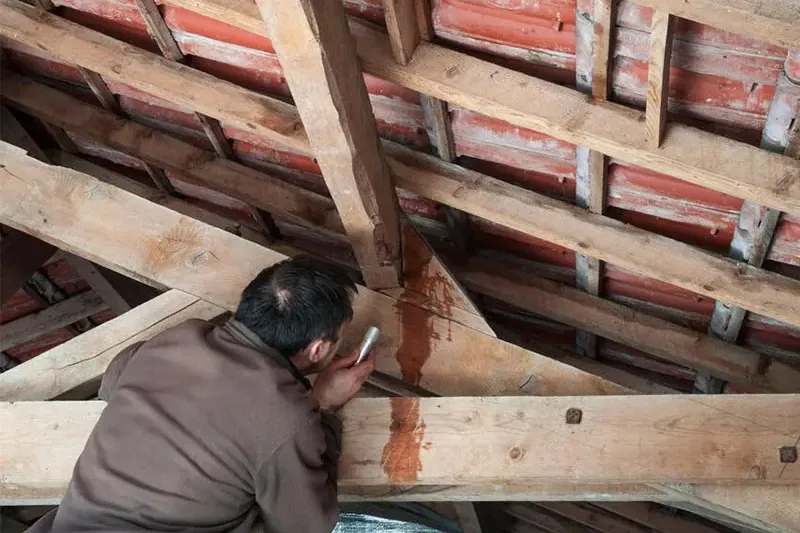
If it is safe, look in the attic with a flashlight for wet insulation, dark wood or drips. Photograph the stain, the attic and any visible roof damage, and note the date of the last storm.
Tarps and temporary protection
A tarp is a stopgap, not a repair. It keeps rain out of the attic while a roofer plans the permanent fix, and the right tarp is secured so that wind does not lift it.
The ceiling work is described under ceiling leak water damage, and the roof side under roof leak water damage.
- A tarp should extend past the damaged area and be fastened on all sides.
- Loose debris and branches are cleared before a tarp goes on.
- A tarp is checked after the next wind, because it can shift.
- A leaking roof needs a permanent repair by a roofer.
What the drying team removes and dries
Roof leaks soak insulation first, then drywall, then the framing around them. Wet insulation holds water against a ceiling for a long time and must come out.
The drying team opens the ceiling where moisture is trapped, removes drywall that has sagged or stained through, and sets dehumidifiers and fans. Readings then show when the ceiling can be closed.
- Wet attic insulation is pulled and bagged.
- Sagging or stained drywall is cut out.
- Framing and the roof deck are checked with moisture meters.
- Dehumidifiers and fans run until readings match a dry reference.
- Repairs and painting start after the structure reads dry.
Fascia, soffits and other hiding places
Fascia and soffit damage was part of the Ida pattern. When a fascia board is lifted or cracked, rain can run behind it, into the soffit and down the top of a wall.
That water often shows as a stain at the top of an exterior wall, not on a ceiling, and it can go unnoticed because it starts where nobody looks.
- Look for peeling paint or dark stains on fascia boards.
- Check soffit vents for stains, gaps or insects entering.
- Look at the gutter edge for sagging or sections pulled away.
- Check the top of exterior walls inside for stains after heavy rain.
A short check after the next storm
A quick walk around the house after a storm can catch a leak before it stains. The hub for the area lists the water damage services for homes in the city.
- Look at the roof from the ground for missing or lifted shingles.
- Check the fascia and soffits for cracks, gaps or stains.
- Look in the attic after heavy rain for damp insulation.
- Clear gutters so water can leave the roof edge.
Questions
How do I know whether a ceiling stain is from the roof?
A roof leak usually grows after rain and follows a rafter, vent or valley. A stain that grows with no rain points to plumbing or an air conditioner drain.
Is a tarp a permanent fix?
No. A tarp keeps more rain out while a roofer plans the repair, and it should be checked after wind.
Does wet insulation have to be removed?
Usually yes. Wet insulation holds water against the ceiling for a long time, and it loses its value as insulation.
Why do some leaks show up days after the storm?
Water travels along rafters and sits in insulation before it soaks through a ceiling, so a stain can appear well after the rain.
Was the roof damage after Hurricane Ida specific to Covington?
The facts are parish wide. Hurricane Ida caused widespread roof and fascia damage across St. Tammany Parish.
How long can a roof leak go unnoticed?
Quite a while. Water soaks the insulation before it stains a ceiling, so the first stain can be the sign of a leak that has been active for some time.